
“THE WAY SHE WAS TREATED IS A SHAME TO THE ENTIRE WORLD OF SPORTS.”
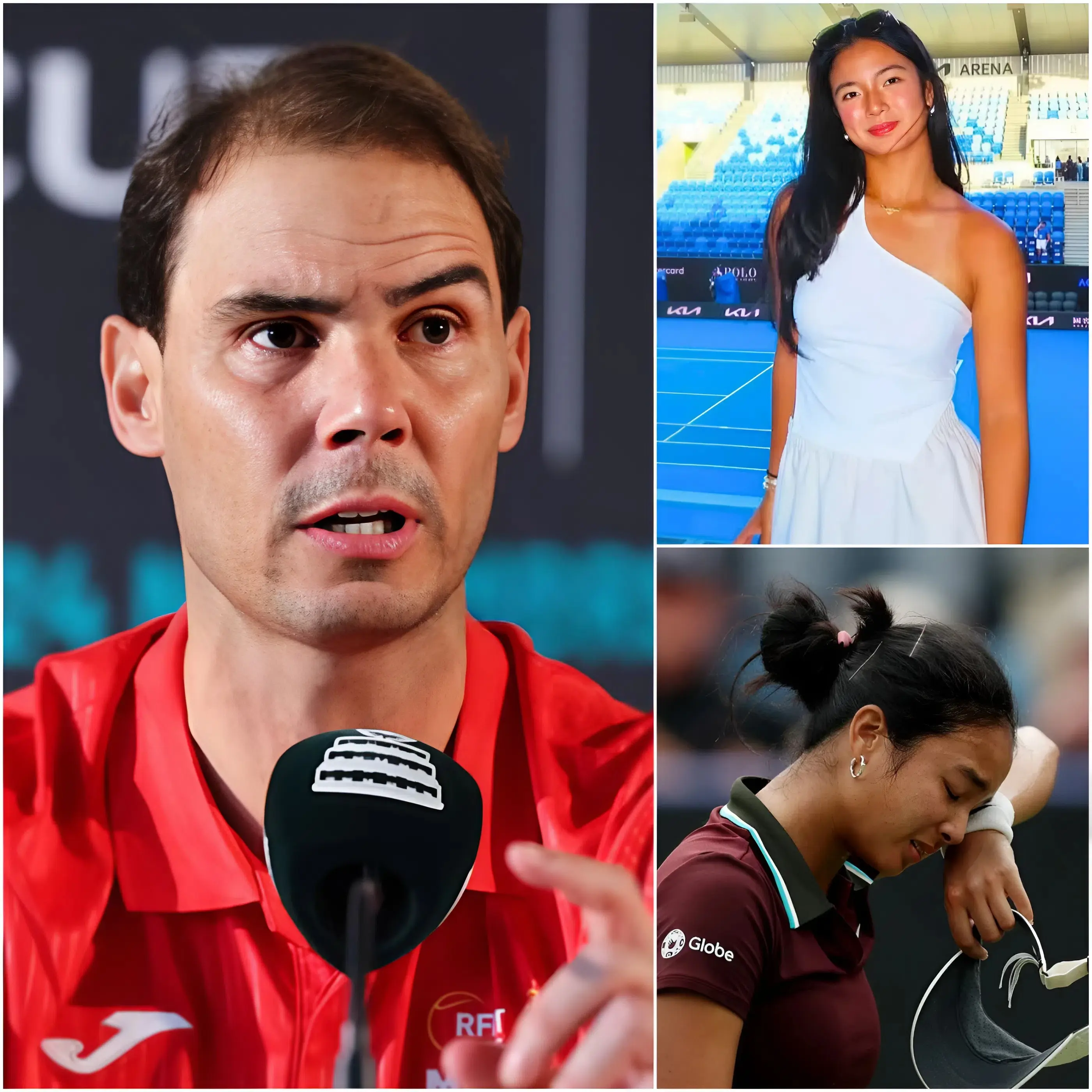
With those powerful words, Rafael Nadal ignited a storm across global tennis, breaking his silence to defend rising Filipino star Alexandra Eala in what he described as a profound injustice within modern professional tennis.
In an era where athletes are scrutinized not only for their performances but for every perceived flaw, Nadal’s public statement resonated far beyond the baseline. It was not simply a defense of a young player—it was a broader indictment of a sporting culture that, in his view, has grown increasingly unforgiving and, at times, merciless.
Alexandra Eala has long been regarded as one of the brightest prospects in Asian tennis. From an early age, she carried the expectations of a nation eager to see its flag represented more prominently on the global stage. As one of the Philippines’ most promising athletes, her journey has been closely followed by fans, sponsors, and media outlets. Every match has seemed to carry meaning beyond the scoreboard.
But promise often comes with pressure. In recent months, Eala has faced intense criticism following a series of challenging performances and inconsistent results. Social media commentary grew harsher, with critics questioning her progress, her training decisions, and even her mental toughness. The tone of the discourse shifted from constructive analysis to personal attack. For a young athlete still developing her game and identity, the weight of that negativity became increasingly visible.
It was against this backdrop that Nadal chose to speak. Known throughout his career not only for his 22 Grand Slam titles but also for his composure and humility, Nadal has rarely entered public controversies. His words therefore carried unusual gravity.

“How can one be so cruel,” Nadal asked, “as to abandon, criticize, and destroy the spirit of a young girl who carries the honor of the Philippines on her shoulders – a girl who has dedicated almost her entire life, enduring constant pressure from the media, social media, and a ruthless competitive system?”
Those present described a rare flash of emotion. Nadal, himself a former teenage prodigy who faced overwhelming expectations from the start of his professional career, seemed to be speaking from experience. He understands the suffocating demands placed on young stars: the travel, the injuries, the scrutiny, and the constant comparisons to legends.
Then came the moment that stunned the tennis world. Nadal paused, looked upward, and delivered a chilling warning in just 12 words: “We are losing our humanity in pursuit of sporting perfection.”
The sentence was brief but thunderous. Within minutes, sports networks replayed the clip repeatedly. Commentators dissected its meaning. Former players offered support. Social media platforms were flooded with reactions, with many praising Nadal for defending a young athlete against what they saw as disproportionate criticism.

For some observers, Nadal’s message was directed at toxic fan culture amplified by digital platforms. In today’s hyperconnected environment, athletes are no longer shielded from public opinion. Every missed forehand can spark thousands of comments within seconds. Every defeat can trend online. The distance between performance and judgment has vanished.
For emerging players like Eala, the psychological burden can be immense. Unlike established champions who have built reputations over decades, young athletes are still shaping their confidence. They must learn to manage expectations while refining technique, building physical strength, and navigating the commercial demands of professional sport.
Eala’s situation is further complicated by the symbolic role she occupies. As one of the Philippines’ most prominent tennis players, she represents more than herself. Each victory is celebrated nationally; each setback can feel magnified. The pride of a country can inspire greatness, but it can also create a sense of isolation when results fall short.
Nadal’s defense highlighted that delicate balance. His words suggested that development is not linear and that greatness cannot be forced through relentless criticism. The path to excellence, he implied, requires patience, empathy, and long-term perspective.
Reactions from within the tennis community were swift. Several players subtly echoed his sentiments, sharing messages about compassion and mental resilience. Analysts debated whether his comments signaled a broader dissatisfaction among veterans regarding how young talents are treated in the modern era. Some questioned whether governing bodies and media organizations bear responsibility for fostering healthier narratives around growth rather than failure.
What is undeniable is that Nadal’s intervention shifted the conversation. Instead of focusing solely on rankings and recent match statistics, discussions turned to athlete welfare and the psychological costs of elite competition. His warning resonated beyond tennis, touching on broader themes within professional sports where commercialization and instant commentary often overshadow humanity.
Throughout his career, Nadal has built a legacy defined not only by relentless intensity on clay courts and hard courts alike, but by respect—for opponents, for the game, and for its traditions. By speaking out for Alexandra Eala, he added another dimension to that legacy: advocacy for compassion in a system that can be brutally unforgiving.
Whether his 12-word warning sparks lasting change remains to be seen. Professional sports are unlikely to slow their pace or dim their spotlight. But moments like this force reflection. They remind fans, journalists, and institutions that behind rankings and statistics stand human beings—often very young ones—carrying dreams that began long before the cameras arrived.
For Alexandra Eala, the public support of a figure as revered as Rafael Nadal may offer reassurance during a turbulent chapter. For the tennis world, his message stands as a stark reminder that the pursuit of perfection must not come at the expense of empathy. In the echo of his words, a simple question lingers: if sport loses its humanity, what exactly remains worth winning?