
Rafael Nadal made history by becoming the first athlete to receive an honorary doctorate from the University of Salamanca, a distinction that transcends titles to celebrate his human values. In a sincere and deeply inspiring speech, he spoke of effort, humility, education, and sport as a transformative force capable of uniting individuals and changing lives. Greeted with a standing ovation, Nadal was honored not only as a tennis legend but also as a symbol of a lifestyle and a competitive spirit whose influence extends far beyond the courts.
The historic investiture of Rafael Nadal as an honorary doctor by the University of Salamanca marked a turning point in the relationship between sport and academia in Spain. In the solemn Paraninfo building, surrounded by dignitaries, professors, and students, the Majorcan champion distinguished himself not only for his career on the courts but also for embodying an ethic of hard work that has inspired generations. The emotion was palpable throughout this institution steeped in centuries of tradition.
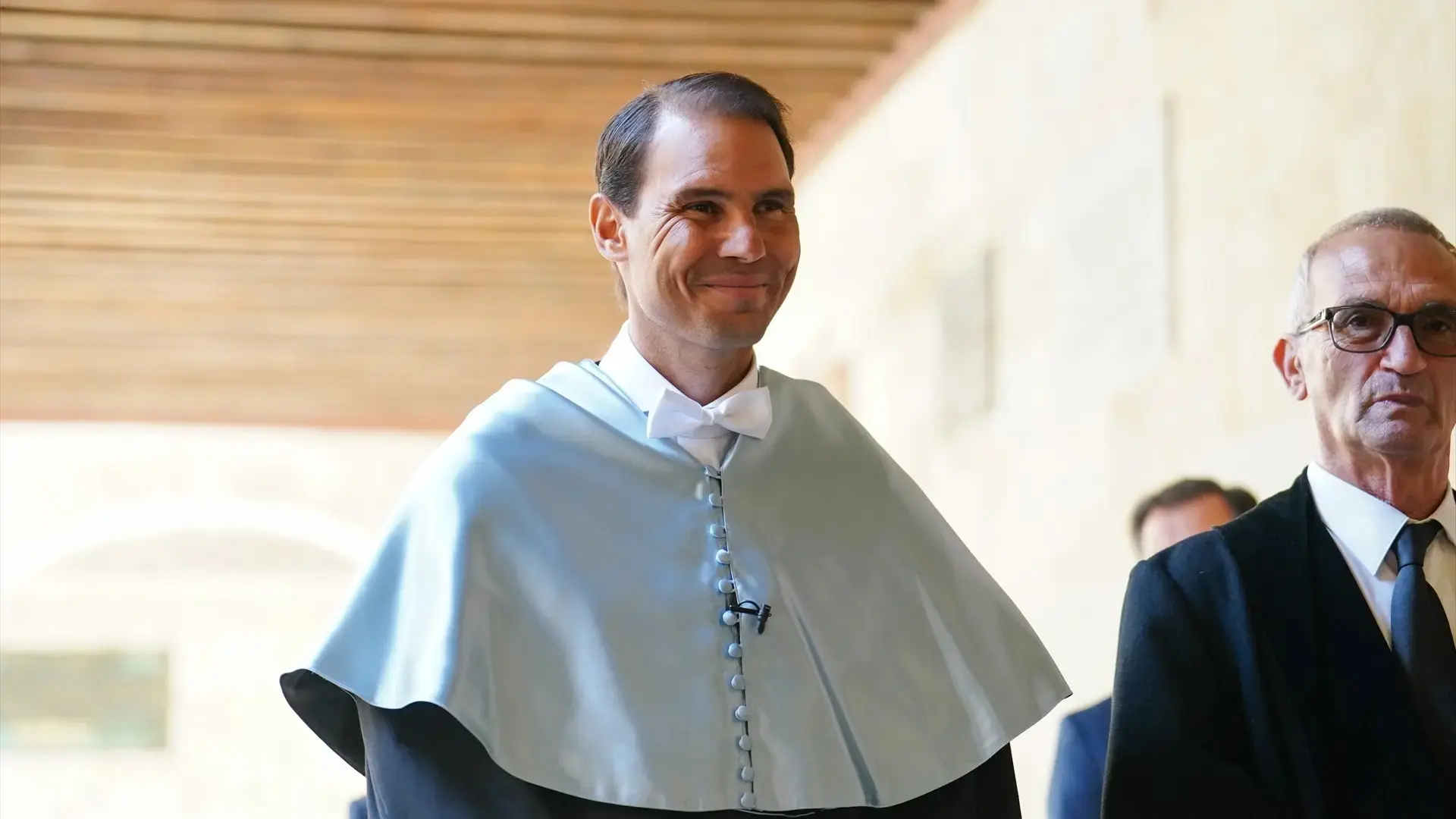
With this recognition, the University of Salamanca made Nadal the first athlete to receive such an honor in its history. The event was not simply a tribute ceremony, but a declaration of principles regarding the educational value of sport. From the outset, the rector emphasized that a way of approaching life based on discipline, respect, and constant improvement was being rewarded—qualities that have defined the tennis player’s career.
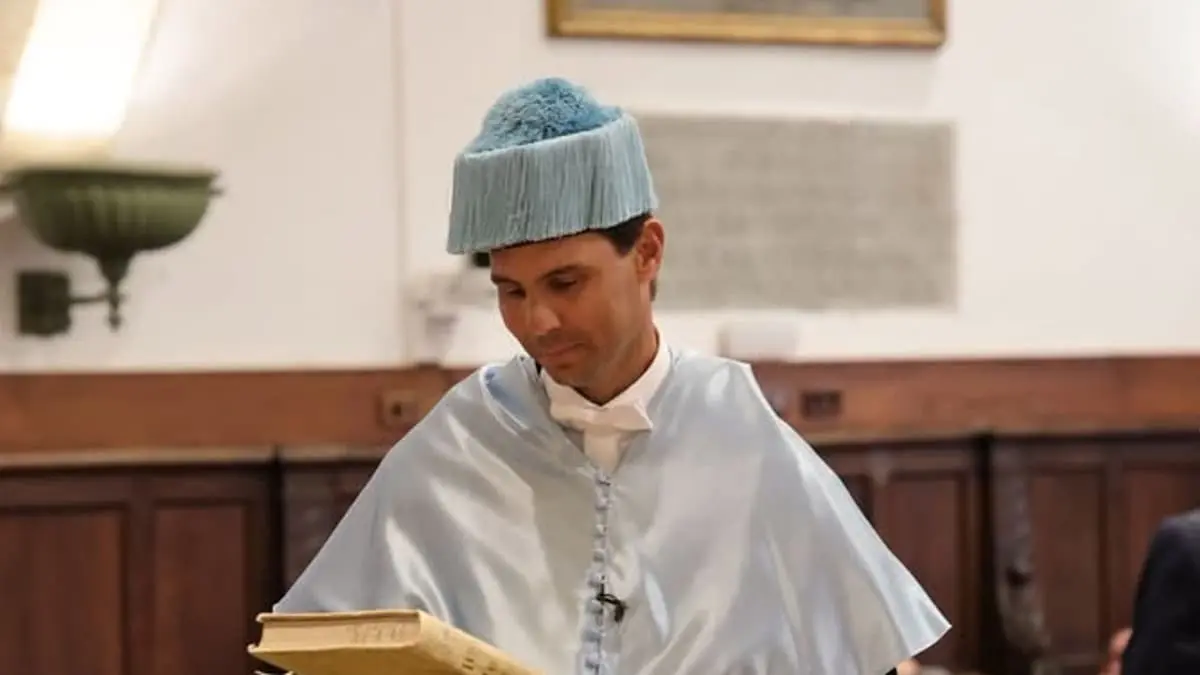
Wearing a cap and a toga, Nadal listened attentively to the laudatory speeches that reviewed his achievements, from Roland Garros to the Davis Cup, but the focus wasn’t on the trophies. Instead, they spoke of his resilience in the face of injury, his exemplary conduct on and off the court, and his commitment to social projects. Each mention elicited applause that resonated loudly under the building’s historic vaults.
In his deeply sincere speech, Nadal confessed that receiving this honor at such an iconic institution made him more nervous than a Grand Slam final. He thanked his family, his team, and especially his parents for instilling in him values that transcend sporting success. He explained that daily effort is the only formula he knows for progress, and that humility has been his greatest ally in moments of triumph and defeat.
One of the most impressive moments came when he spoke about education as a driver of change. He emphasized that while sport can open doors, it is training that allows us to remain resilient in the face of life’s challenges. According to sources present at the event, before speaking, he privately stated that he hoped his message would help young people understand that talent without discipline rarely leads to success.
During his speech, he also revealed a little-known detail about his mental routine before important matches. He explained that, rather than visualizing victory, he focuses on accepting the possibility of making a mistake and learning from it. He commented that from a young age, he understood that losing was part of the journey and that this mentality allowed him to face serious injuries without giving up or losing hope.
The audience responded with a standing ovation when Nadal declared that true success is not measured in trophies, but in the peace with which one can look at oneself in the mirror. Some attendees remarked that the preceding silence was absolute, as if each word resonated personally with those who heard it. The athlete spoke without grandiloquence, with the naturalness that has always characterized him.
After the ceremony, during a smaller gathering with the students, he shared even more personal reflections. According to witnesses, he confessed that at various points in his career, he had doubted his continuation due to persistent physical pain. He admitted that there were evenings when he wondered if it was worth continuing to compete, but that the support of those around him and his passion for tennis gave him the strength to persevere.
In subsequent conversations, Nadal emphasized that sport is a powerful tool for uniting cultures and breaking down social barriers. He stressed that in the locker room, one learns to respect one’s opponent and value teamwork—lessons applicable to any professional field. He also expressed his hope that more academic institutions would recognize the formative role of sport in shaping responsible citizens.
This investiture not only cemented Rafael Nadal as a tennis legend but also elevated him to the status of a symbol of a lifestyle based on commitment and consistency. Beyond the courts, his image represents the possibility of competing intensely without sacrificing respect and humanity. In Salamanca, within centuries-old walls, it was clear that his legacy transcends titles and is rooted in enduring values.
Ultimately, several professors emphasized that Nadal represents an unusual synthesis of professional excellence and ethical commitment. In a brief exchange with the press, the tennis player acknowledged that this recognition obliges him to remain consistent with the values he upholds, and added that each of his steps will now be guided by the responsibility to set an example. The University of Salamanca, for its part, confirmed that his speech will be incorporated as reference material in its student training activities.